
Memory Changes:
What’s Normal and What’s Not?
Have you noticed changes in your memory?
Some forgetfulness is a normal part of aging. Just as our bodies change over time, so do our brains.
Normal Age-Related Changes
These experiences are usually not a cause for concern:
- Walking into a room and forgetting why you went there
- Forgetting a word or someone’s name, then remembering it later
- Misplacing things on occasion
- Forgetting to take a medication from time to time
- Making an occasional mistake with finances or bills
- Slower recall and feeling less mentally sharp than before
Memory lapses can happen at any age. But if they become more frequent or begin to interfere with daily life, it’s important to talk with a doctor.
Abnormal Changes
Schedule an evaluation with your doctor if you notice:
- Repeating questions or stories often
- Getting lost in familiar places
- Missing bill payments regularly
- Difficulty following directions or recipes
- Forgetting important dates or events
- Losing track of time
- Trouble with words, writing, or following conversations
- Changes in mood, personality, or judgment
Who Should I See?
Start with your primary care provider (PCP) or a geriatrician (a doctor who specializes in older adults). Some people may be referred to a neurologist or brain health specialist.
The goal of an evaluation is to understand:
- Is there a problem?
- What is causing it?
- What can be done?
Even if the changes are part of normal aging, there are steps you can take to protect and strengthen your brain including by following the guidelines on this website.
Some Memory Problems Can Be Reversed
Common Reversible Causes:
Low thyroid function (hypothyroidism). Your doctor can check a blood test called Thyroid Stimulating Hormone (TSH). If you are diagnosed with hypothyroidism, it can be treated with medication.
Vitamin B12 deficiency. Low B12 levels can affect memory and thinking. Vitamin B12 levels can be checked by your doctor and treated with supplements or injections.
Poor sleep or chronic insomnia. Sleep is critical for memory. Improving sleep habits (known as sleep hygiene) or treating sleep disorders can improve memory and thinking skills.
Obstructive sleep apnea. Untreated sleep apnea can cause abnormal brain changes that can lead to cognitive impairment or dementia. Signs include loud snoring, pauses in breathing during sleep, daytime sleepiness, and difficulty concentrating. Treatment can improve symptoms and reduce dementia risk.
Medication side effects. Some medications – especially certain sleep aids, anxiety medications, and pain medications – can affect memory. Review your medications with your doctor at least once a year.
Some Memory Problems Cannot Be Reversed
Some cognitive changes are caused by diseases like Alzheimer’s or other types of dementia. While we cannot cure these diseases, treatments are available that may slow progression and improve symptoms. Having a diagnosis also helps families to plan and prepare. Early diagnosis provides more options and better outcomes.
The Takeaway: Don’t Wait
If you’re concerned about your memory, get evaluated sooner rather than later. Addressing memory concerns early on gives you the best opportunity to treat reversible causes and slow cognitive decline.
Taking action early truly makes a difference.
Stages of Cognitive Decline
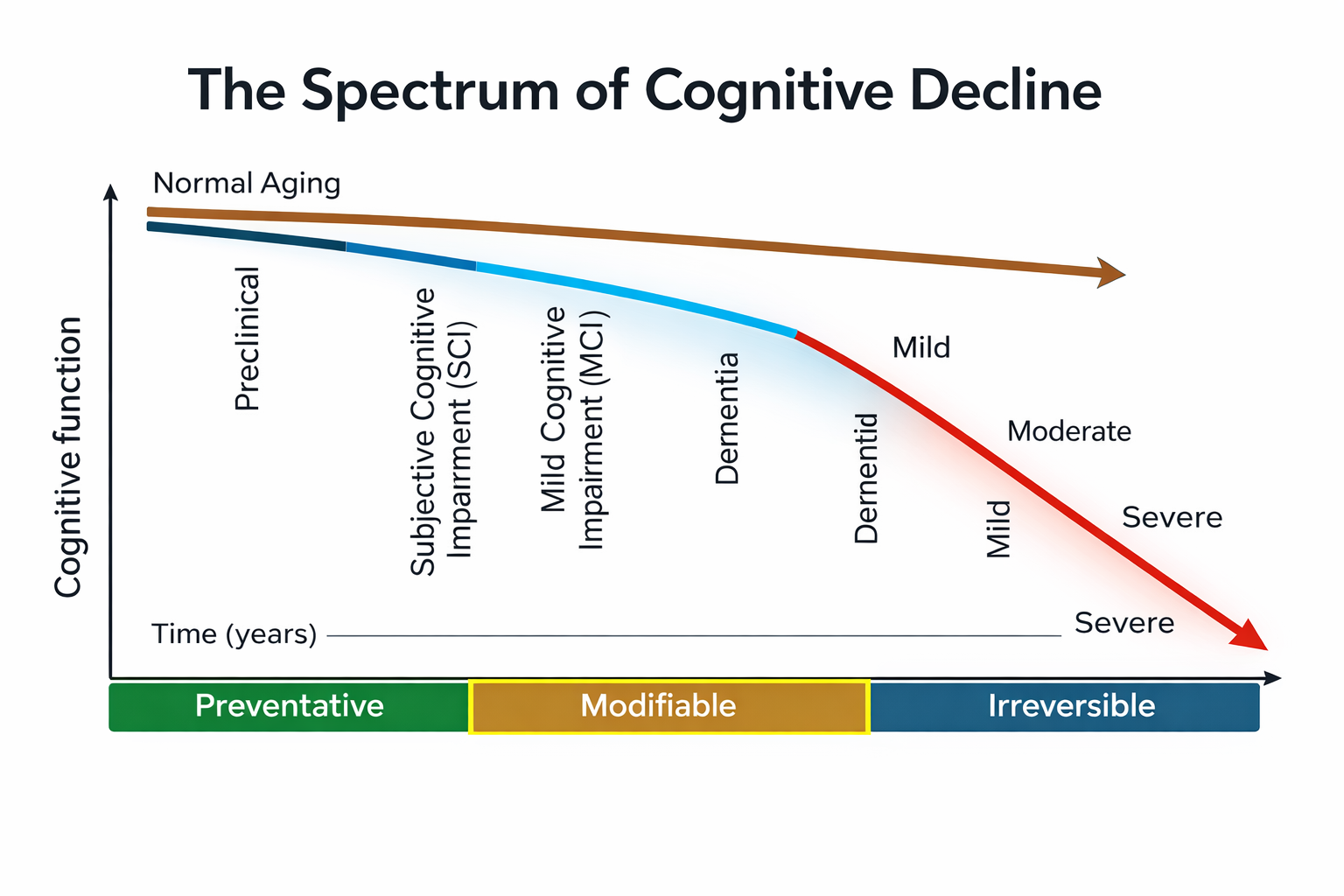
Cognitive decline happens along a spectrum.
The earlier we take action to protect our brain health, the more impact we can have on slowing cognitive decline to stay sharp as long as possible.
If you notice changes in memory or thinking, don’t ignore them. See your doctor for an evaluation and adopt a brain-healthy lifestyle. These two steps can make a meaningful difference.
Age-Related Cognitive Decline
As we age, our brains change, which can cause our cognitive function to gradually decline. This is a normal part of aging. Common age-related changes include slower recall, occasional memory lapses, and needing more time to process and learn new information.
These changes can feel frustrating, but they are usually not a cause for concern.
The good news: Healthy habits – like exercise, good sleep, mental activity, social connection, and a brain-healthy diet – can slow normal age-related decline.
Abnormal Cognitive Decline
Abnormal cognitive decline is when an individual experiences more cognitive changes than is expected with age.
The process starts with a Preclinical stage decades before symptoms appear. During the Preclinical stage, abnormal brain changes are occurring, but there are no noticeable symptoms. Prevention and healthy lifestyle habits are critical before symptoms begin to possibly prevent symptoms from developing.
Subjective Cognitive Impairment
The abnormal brain changes in the Preclinical stage can progress to Subjective Cognitive Impairment. At this stage, a person notices memory changes, but cognitive testing is still normal. Examples of symptoms may include feeling more forgetful than before, having trouble concentrating, and feeling mentally slower.
Even though cognitive testing is in the normal range, these symptoms should not be ignored. This is an important time to strengthen brain health. Lifestyle changes can slow – and possibly reverse – early decline.
Mild Cognitive Impairment
If brain changes continue to worsen over time, Subjective Cognitive Impairment can progress to Mild Cognitive Impairment (MCI).
MCI is the stage between normal aging and dementia that is known as pre-dementia. People with MCI have more noticeable memory or thinking problems and score lower on cognitive testing, yet they are still able to manage their daily activities and function independently.
What causes MCI?
There is no single cause. The risk of developing MCI increases with age. Conditions such as diabetes, depression, high blood pressure, and stroke can increase the risk for MCI.
Does MCI always progress to dementia?
No. Some people with MCI remain stable and never develop dementia and some people improve. The outcome depends on the cause and the steps taken to improve brain health.
Importantly, this stage is still a window of opportunity to take action to slow cognitive decline and lower the risk of dementia.
Dementia
Dementia is not a normal part of aging. Dementia is a group of symptoms caused by diseases that affect the brain. Symptoms may include:
- Significant memory loss
- Difficulty thinking, reasoning, or problem-solving
- Difficulty communicating
- Trouble managing daily tasks
- Changes in personality or behavior
These changes are severe enough to interfere with daily functioning and independence.
Several diseases can cause dementia. The most common is Alzheimer’s disease. The risk of Alzheimer’s increases with age and is more common in women. Other types include vascular dementia, Lewy body dementia, frontotemporal dementia, and mixed dementia.
Can dementia be prevented?
Research suggests that up to 45% of dementia cases worldwide may be preventable by addressing lifestyle, environmental, and health risk factors.
While we cannot cure Alzheimer’s disease, we can:
- Lower risk with preventive care
- Slow progression of cognitive decline
- Improve quality of life at all stages
What about genetics?
Having a family history of Alzheimer’s does not mean you will develop it.
Some people carry a gene called APOE4, which increases risk but does not guarantee Alzheimer’s disease will develop. Lifestyle choices are very important, especially for individuals with genetic risk.